Español
 English
- Not available


Hergé Por Él Mismo
Portrait Of An Artist Who Was Also A Man: Hergé
Hergé, one of the greatest artists of the 20th century said:
"Tintin was born out of my unconscious desire to be perfect, to be a hero."
What most people ignore is that Hergé handled the pen as well as the brush. A thorough study of Hergé by Dominique Maricq, author of other books such as Les trésors de Tintin. This biography reviews the personality of Georges Remi from letters of correspondence, interview statements or anthologies of his work. The book reveals a man rich in ideas, concepts, thoughts, with a tender humor and full of love and friendship.
Paperback
Language: Spanish
Hergé Por Él Mismo
Portrait Of An Artist Who Was Also A Man: Hergé
Hergé, one of the greatest artists of the 20th century said:
"Tintin was born out of my unconscious desire to be perfect, to be a hero."
What most people ignore is that Hergé handled the pen as well as the brush. A thorough study of Hergé by Dominique Maricq, author of other books such as Les trésors de Tintin. This biography reviews the personality of Georges Remi from letters of correspondence, interview statements or anthologies of his work. The book reveals a man rich in ideas, concepts, thoughts, with a tender humor and full of love and friendship.
Paperback
Language: Spanish

Tintin - The Small Book Of Dangers
Small book that collects several vignettes of Tintin in danger throughout his most famous adventures.
For example, running away from villains, tied to a train track, facing dangerous animals or crossing a cliff.
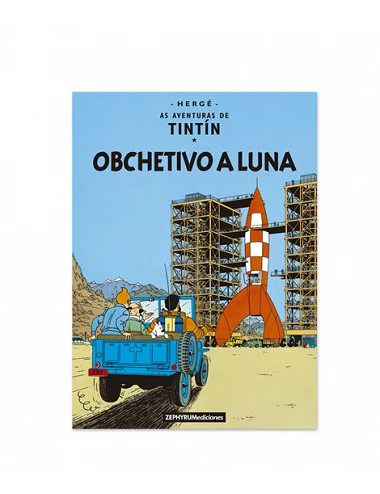
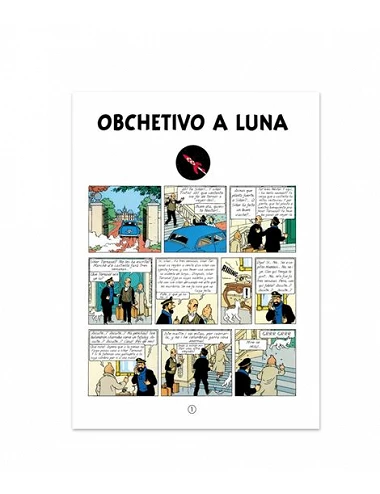
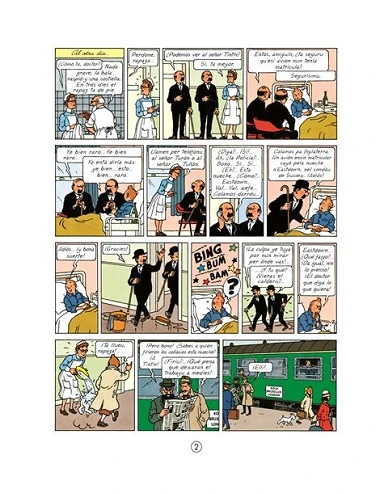
New translation of Destination: Moon in Aragonese with the title Obchetivo a Luna. New album of The Adventures of Tintin translated into this Romance language spoken mainly in the northern regions of Aragon. Currently, Aragonese is spoken by about 25,000 people. Objective: The Moon began to be published in the weekly magazine Tintin on March 30, 1950, nineteen years before the arrival of man on the moon. The first part of Tintin's journey with the rocket, an adventure devised by Hergé.
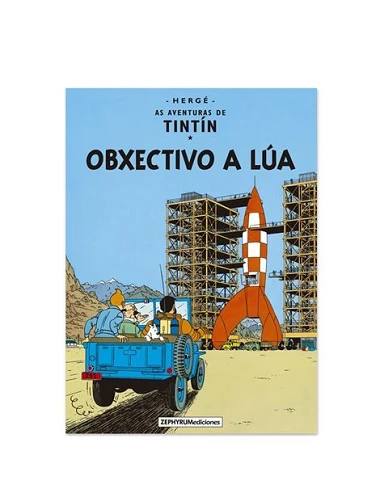
Zephyrum 16 -Tintín Obxectivo A Lúa - Gallego
New translation of Destination Moon in Galician with the title Obxetivo: a Lúa. New album of The Adventures of Tintin published in this language. Galician is one of the nine Romance languages that come from Latin and has about 800,000 speakers, mainly in Galicia. Destination Moon began to be published in the weekly magazine Tintin on March 30, 1950, nineteen years before the arrival of man on the moon. The first part of Tintin's journey with the rocket, an adventure devised by Hergé.
Museo Hergé - Collector's Edition
This collector's edition of the Hergé Museum book, is characterized by containing an unpublished lithograph belonging to a private collection, a chest where the book is kept, and it is also a limited edition numbered to 200 copies. A careful edition that will delight the always demanding readers and collectors of Tintin.
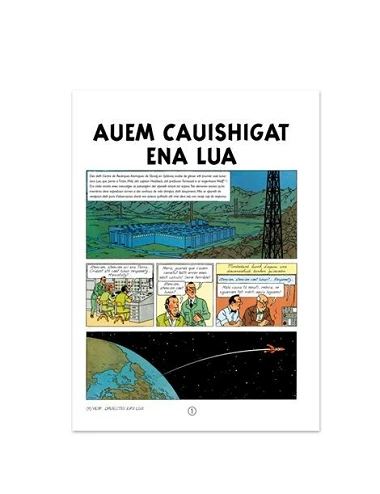
Zephyrum 17 - Tintin Auem Cauishigat Ena Lua - Aranese
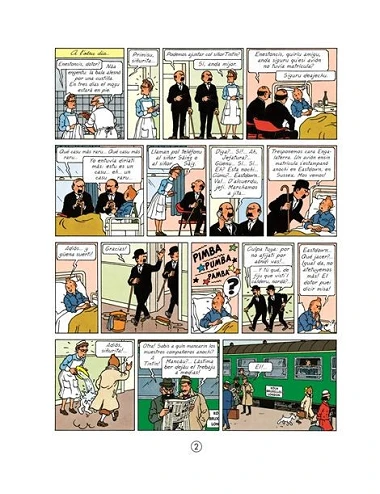
New translation of Explorers on the Moon in Aranese with the title Auem cauishigat ena Lua. New album of The Adventures of Tintin translated into this Occitan language spoken in the Aran Valley, a region in the northwest of Catalonia. It is the language of this region and currently has about 4,500 speakers. Explorers on the Moon is the second installment of Tintin's lunar adventure, published in 1954.
Zephyrum 17 - Tintín Pasiando Pela Lluna - Asturiano
New translation of Explorers on the Moon in Asturian with the title Pasiando pela Lluna. New album of The Adventures of Tintin published in this language. Asturian, also known as Bable, is a Romance language spoken mainly in the Principality of Asturias and in some regions of León and Zamora. Explorers on the Moon is the second installment of Tintin's lunar adventure, published in 1954.
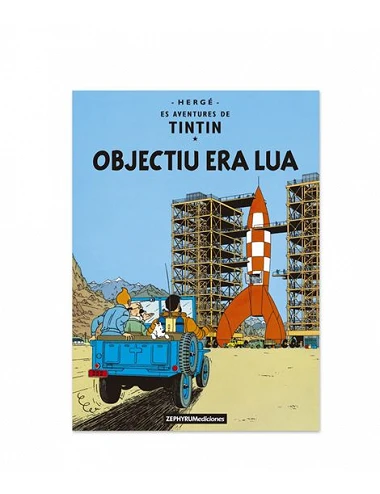
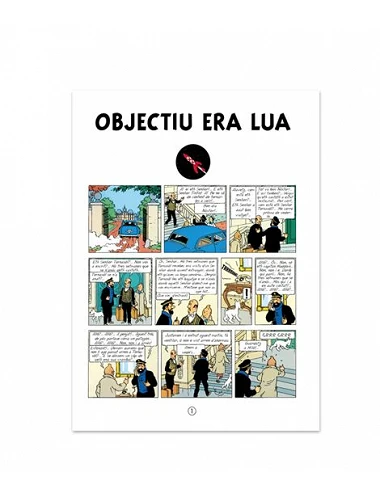
ZEPHYRUM 16 -TINTIN OBJECTIU ERA LUA - Aranes
New translation of Destination: Moon into Aranese with the title Objectiu era Lua. New album of The Adventures of Tintin translated into this Occitan language spoken in the Aran Valley, a region in the northwest of Catalonia. It is the language of this region and currently has about 4,500 speakers. Objective: The Moon began to be published in the weekly magazine Tintin on March 30, 1950, nineteen years before the arrival of man on the moon. The first part of Tintin's journey with the rocket, an adventure devised by Hergé.
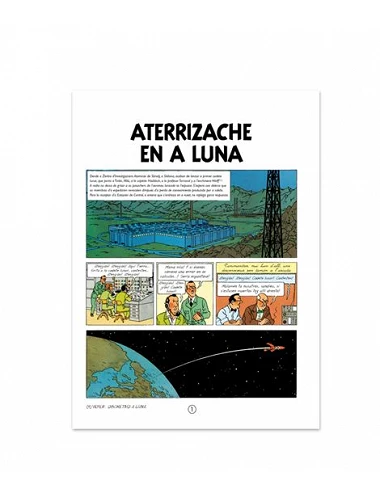
ZEPHYRUM 17 - TINTÍN ATERRIZACHE EN A LUNA - Aragonés
New translation of Explorers on the Moon in Aragonese with the title Aterrizachee en a Luna. New album of The Adventures of Tintin translated into this Romance language spoken mainly in the northern regions of Aragon. Currently, Aragonese fabla is spoken by about 25,000 people. Landing on the Moon is the second installment of Tintin's lunar adventure, published in 1954.
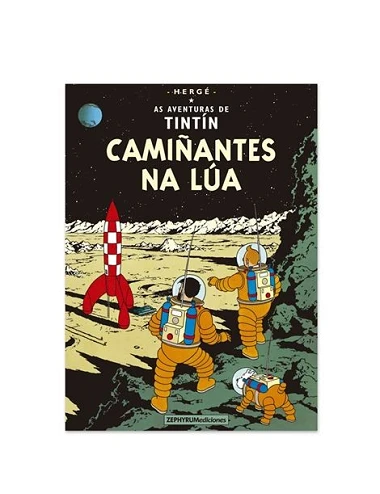
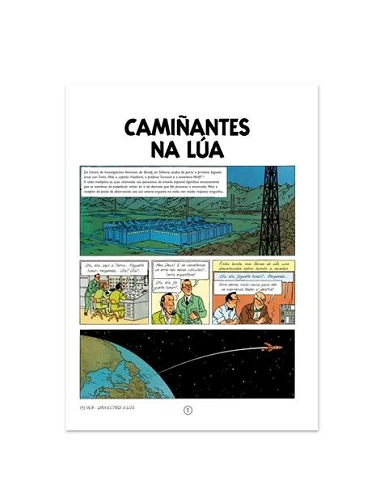
Zephyrum 17 - Tintín Camiñantes Na Lúa - Gallego
New translation of Aterrizaje en la Luna in Galician with the title Camiñantes na Lúa. New album of The Adventures of Tintin published in this language. Galician is one of the nine Romance languages that come from Latin and has about 800,000 speakers, mainly in Galicia. Aterrizaje en la Luna is the second installment of Tintin's lunar adventure, published in 1954.
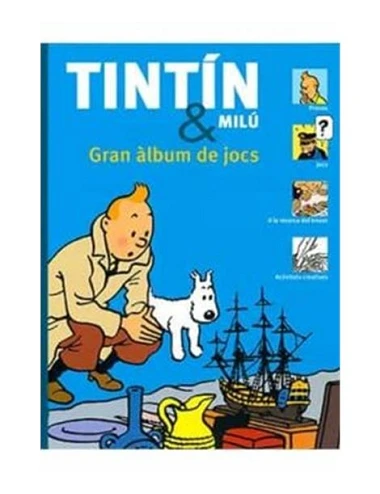
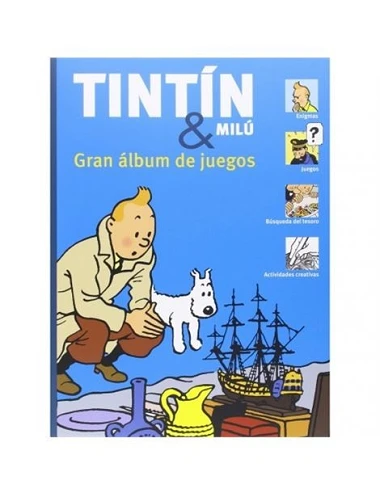
Tintin Y Snowy – The Great Album Of Games
New edition of this book, created, produced and written by Guy Harvey and Simon Beecroft. It is a tintinophile review for the most adventurous. This edition is published by Zephyrum Ediciones, adapting the texts to the original translations of the publisher Juventud. The cover, on this occasion, is blue and contains two new pages with more riddles. Tintin and Snowy: Gran álbum de juegos is full of tests, experiments, games, riddles, pastimes and exercises to learn how to draw characters. It includes solutions to all the tests.
Binding: Paperback (96 pp.)
Format: 21.7 x 29.4 cm.
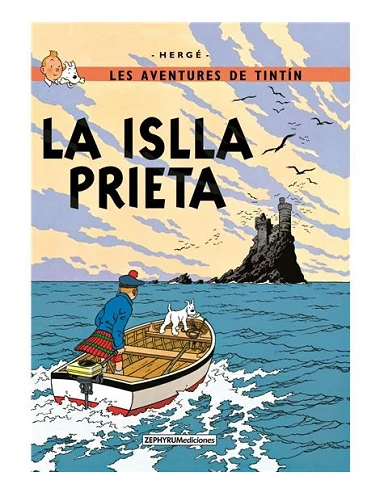
The Adventures of Tintin 07 – La Islla Prieta - Asturian
New translation of The Black Island in Asturian with the title La islla prieta. New album of The Adventures of Tintin published in this language. Asturian, also known as Bable, is a Romance language spoken mainly in the Principality of Asturias and in some regions of León and Zamora.
The Black Island is the seventh album of The Adventures of Tintin in which Hergé skillfully combines fact and fiction. Tintin is Belgium's most famous journalist and on his return from South America, he reflects in this adventure certain elements of the course of history at the time and Hergé's uneasiness in a climate of disturbing peace and fear of another world war. It also makes the myth of the monster coexist with his passion for modernity and the technical advances of the time: television, radio, airairplanes, cars, printing... It is the album that has more versions. The first appeared weekly in Le Petit Vingtième, in 1937 and 1938, a version that Casterman later published in black and white album format and 124 pages. The second, from 1943, is the colored version, barely modified and already adapted to the canonical format of 62 pages. Finally, the 1966 version, in which Bob de Moor intervened, was completely redrawn and corrected at the request of the London publisher. We have based our translations on the latter edition.
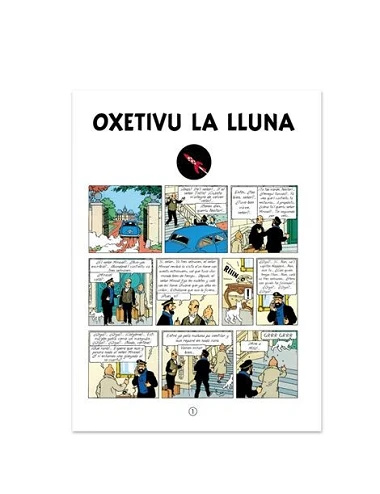
Zephyrum 16 - Tintín Oxetivu La Lluna - Asturiano
New translation of Destination Moon in Asturian with the title Oxetivu: La Lluna. New album of The Adventures of Tintin published in this language. Asturian, also known as Bable, is a Romance language spoken mainly in the Principality of Asturias and in some regions of León and Zamora. Destination Moon began to be published in the weekly magazine Tintin on March 30, 1950, nineteen years before the arrival of man on the moon. The first part of Tintin's journey with the rocket, an adventure devised by Hergé.
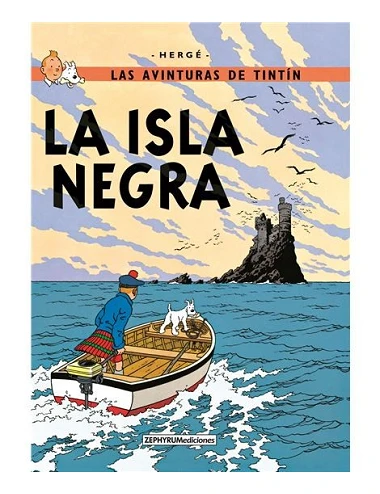
The Adventures of Tintin 07 – La Isla Negra - Cantabria
New translation of The Black Island in Cantabrian with the title The Black Island.
The Black Island is the seventh album of The Adventures of Tintin in which Hergé skillfully combines fact and fiction. Tintin is Belgium's most famous journalist and on his return from South America, he reflects in this adventure certain elements of the course of history at the time and Hergé's uneasiness in a climate of disturbing peace and fear of another world war. It also makes the myth of the monster coexist with his passion for modernity and the technical advances of the time: television, radio, airairplanes, cars, printing... It is the album that has more versions. The first appeared weekly in Le Petit Vingtième, in 1937 and 1938, a version that Casterman later published in black and white album format and 124 pages. The second, from 1943, is the colored version, barely modified and already adapted to the canonical format of 62 pages. Finally, the 1966 version, in which Bob de Moor intervened, was completely redrawn and corrected at the request of the London publisher. We have based our translations on the latter edition.
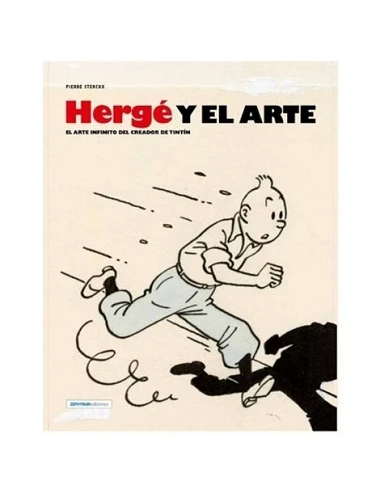
Hergé Y El Arte
Indispensable book for any follower of Hergé's work. Published by Zephyrum, this volume is a detailed study of The Adventures of Tintin and the drawing style of the Belgian master.
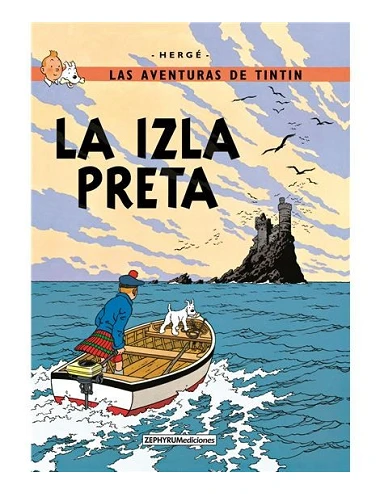
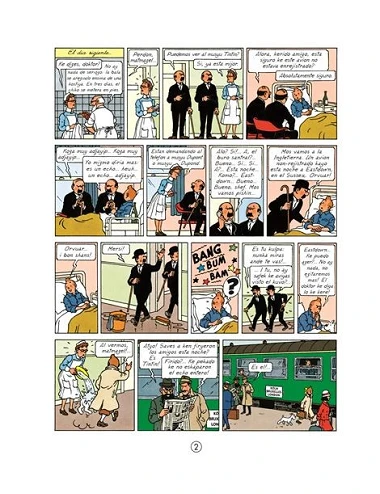
The Adventures of Tintin 07 - La Izla Preta - Judeo-Spanish
New translation of The Black Island in Judeo-Spanish with the title La izla preta.
The Black Island is the seventh album of The Adventures of Tintin in which Hergé skillfully combines fact and fiction. Tintin is Belgium's most famous journalist and on his return from South America, he reflects in this adventure certain elements of the course of history at the time and Hergé's uneasiness in a climate of disturbing peace and fear of another world war. It also makes the myth of the monster coexist with his passion for modernity and the technical advances of the time: television, radio, airairplanes, cars, printing... It is the album that has more versions. The first appeared weekly in Le Petit Vingtième, in 1937 and 1938, a version that Casterman later published in black and white album format and 124 pages. The second, from 1943, is the colored version, barely modified and already adapted to the canonical format of 62 pages. Finally, the 1966 version, in which Bob de Moor intervened, was completely redrawn and corrected at the request of the London publisher. We have based our translations on the latter edition.
Collection of official Tintin badges, with illustrations of vignettes belonging to the adventures: "The crab with the golden claws", "The secret of the Unicorn" and "The treasure of Rackham the Red".
Collectible TF1 Tintin resin figurine – HADDOCK SACK 42188
This figurine, hand-painted, corresponds to the vignette A3 (page 52) of the album The Seven Crystal Balls when Captain Haddock, sack in hand, decides to go in search of Professor Calculus to the port of Saint-Nazaire.
Height: 12 cm.
Tintin travels on a cruise ship bound for the Far East. On board he meets the strange Egyptologist Philemon Cyclone, who is traveling in search of the tomb of the Egyptian pharaoh Kih-Oskh. Tintin accompanies him to the tomb and there he discovers the mysterious cigars, which hide more than just tobacco. He is then kidnapped and abandoned at sea, but is saved and lands in Arabia. After numerous vicissitudes he ends up in India, where he stays with the Maharaja of Rawhajpurtalah. Here appear characters that we will meet again later: the ineffable policemen Thomson and Thompson, the evil Rastapopoulos and the peculiar Oliveira de Salazar. Cigars of the Pharaoh begin to appear in Le petit Vingtiéme on December 8, 1932. It was the time when the news of the curse of Tutankhamun's tomb occupied many pages of the tabloids. This subject interested Hergé so much that years later he raised it again in The Seven Crystal Balls.
Translated by Concepción Zendrera
23 x 30 cm
Cardboard
64 pages
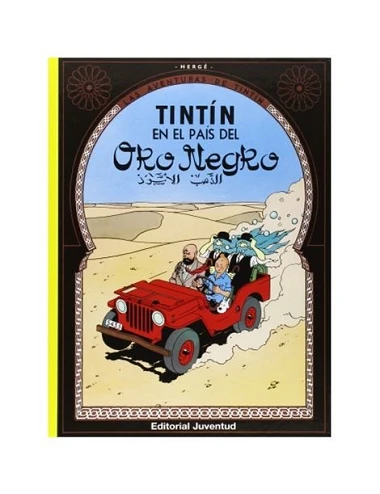
This Tintin adventure is about the struggle between the big oil companies. It all starts when adulterated gasoline invades the market. Tintin travels to the country of Khemed, where a power struggle pits Emir Ben Kalish Ezab against Bab El Ehr, each financed by a different oil company. Enter the terrible Abdalah, the emir's son. Hergé was inspired by a photograph of the real King Faisal II as a child. This album has gone through numerous versions before knowing its final form. It began to appear on September 25, 1939 in Le Petit Vingtième, following King Ottokar's Sceptre, but the war broke out. On May 9, 1940, the German forces entered Brussels and the publication of Le Petit Vingtième was interrupted, and with it, Tintin in land of black gold. The story stops on the current page 26 of the album, and will not be continued until 6 years later in Tintin magazine.
Translated by Concepción Zendrera
23 x 30 cm
Cardboard
64 pages
La Castafiore announces her arrival in Moulinsart, and the captain tries to flee the trip in a hurry, but stumbles on a broken step that they have not yet come to fix and breaks his ligaments. The rumor of a sentimental relationship between the singer and the "old sea dog" is born and everything is full of paparazzi. And the jewels disappear... In this album there are no travels or great adventures, and that is the grace of Hergé to maintain the intrigue. All the action takes place in Moulinsart, in and around the gardens of the castle. As Hergé himself tells us: "When I started this album, my intention was also to simplify, to train myself to tell, this time, a story in which nothing happens, without resorting to exoticism. Simply to see if I could keep the reader in suspense until the end.
Translated by Concepción Zendrera
23 x 30 cm
Cardboard
64 pages
Tintin Pocket Diary 2026
10x15 cm.
Matt laminated
Paperback with flyleaves
In two languages: French and English
Hergé Por Él Mismo
Portrait Of An Artist Who Was Also A Man: Hergé
Hergé, one of the greatest artists of the 20th century said:
"Tintin was born out of my unconscious desire to be perfect, to be a hero."
What most people ignore is that Hergé handled the pen as well as the brush. A thorough study of Hergé by Dominique Maricq, author of other books such as Les trésors de Tintin. This biography reviews the personality of Georges Remi from letters of correspondence, interview statements or anthologies of his work. The book reveals a man rich in ideas, concepts, thoughts, with a tender humor and full of love and friendship.
Paperback
Language: Spanish