Español
 English
- Not available


Hergé Y El Arte
Indispensable book for any follower of Hergé's work. Published by Zephyrum, this volume is a detailed study of The Adventures of Tintin and the drawing style of the Belgian master.
Hergé Y El Arte
Indispensable book for any follower of Hergé's work. Published by Zephyrum, this volume is a detailed study of The Adventures of Tintin and the drawing style of the Belgian master.

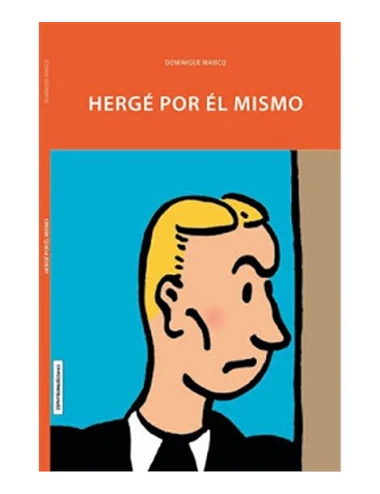
Hergé Por Él Mismo
Portrait Of An Artist Who Was Also A Man: Hergé
Hergé, one of the greatest artists of the 20th century said:
"Tintin was born out of my unconscious desire to be perfect, to be a hero."
What most people ignore is that Hergé handled the pen as well as the brush. A thorough study of Hergé by Dominique Maricq, author of other books such as Les trésors de Tintin. This biography reviews the personality of Georges Remi from letters of correspondence, interview statements or anthologies of his work. The book reveals a man rich in ideas, concepts, thoughts, with a tender humor and full of love and friendship.
Paperback
Language: Spanish
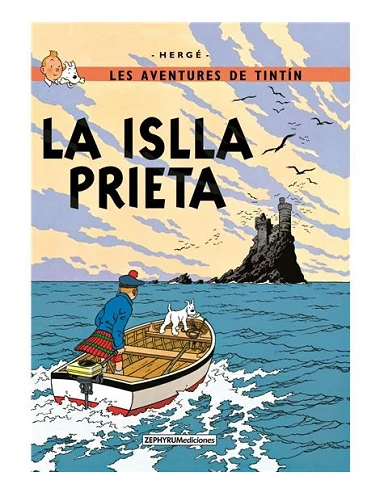
The Adventures of Tintin 07 – La Islla Prieta - Asturian
New translation of The Black Island in Asturian with the title La islla prieta. New album of The Adventures of Tintin published in this language. Asturian, also known as Bable, is a Romance language spoken mainly in the Principality of Asturias and in some regions of León and Zamora.
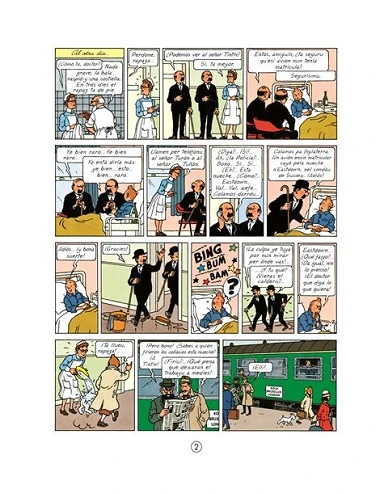
The Black Island is the seventh album of The Adventures of Tintin in which Hergé skillfully combines fact and fiction. Tintin is Belgium's most famous journalist and on his return from South America, he reflects in this adventure certain elements of the course of history at the time and Hergé's uneasiness in a climate of disturbing peace and fear of another world war. It also makes the myth of the monster coexist with his passion for modernity and the technical advances of the time: television, radio, airairplanes, cars, printing... It is the album that has more versions. The first appeared weekly in Le Petit Vingtième, in 1937 and 1938, a version that Casterman later published in black and white album format and 124 pages. The second, from 1943, is the colored version, barely modified and already adapted to the canonical format of 62 pages. Finally, the 1966 version, in which Bob de Moor intervened, was completely redrawn and corrected at the request of the London publisher. We have based our translations on the latter edition.
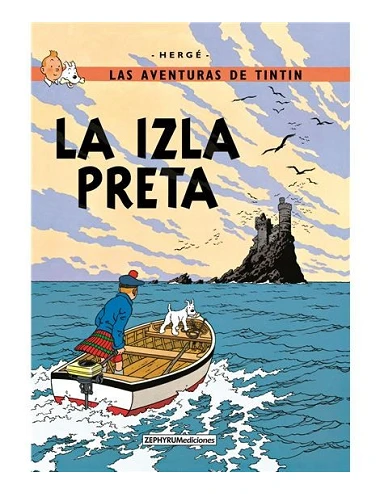
The Adventures of Tintin 07 - La Izla Preta - Judeo-Spanish
New translation of The Black Island in Judeo-Spanish with the title La izla preta.
The Black Island is the seventh album of The Adventures of Tintin in which Hergé skillfully combines fact and fiction. Tintin is Belgium's most famous journalist and on his return from South America, he reflects in this adventure certain elements of the course of history at the time and Hergé's uneasiness in a climate of disturbing peace and fear of another world war. It also makes the myth of the monster coexist with his passion for modernity and the technical advances of the time: television, radio, airairplanes, cars, printing... It is the album that has more versions. The first appeared weekly in Le Petit Vingtième, in 1937 and 1938, a version that Casterman later published in black and white album format and 124 pages. The second, from 1943, is the colored version, barely modified and already adapted to the canonical format of 62 pages. Finally, the 1966 version, in which Bob de Moor intervened, was completely redrawn and corrected at the request of the London publisher. We have based our translations on the latter edition.
Tintin - The Small Book Of Dangers
Small book that collects several vignettes of Tintin in danger throughout his most famous adventures.
For example, running away from villains, tied to a train track, facing dangerous animals or crossing a cliff.
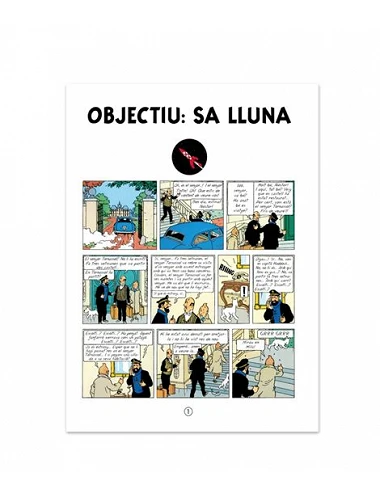
ZEPHYRUM 16 -TINTÍN OBJECTIU: SA LLUNA - MALLORQUÍN
New translation of Destination: Moon in Mallorquin with the title Objectiu: Sa Lluna. First album of The Adventures of Tintin published in this linguistic variety of Catalan, spoken on the island of Mallorca and other islands of the Balearic archipelago. Objective: The Moon began to be published in the weekly magazine Tintin on March 30, 1950, nineteen years before the arrival of man on the moon. The first part of Tintin's journey with the rocket, an adventure devised by Hergé.
The Adventures Of Tintin 07 - Uharte Beltza - Euskera
New translation of The Black Island into Basque under the title Uharte beltza. This is the fourth time that The Adventures of Tintin has been published in this language, although this is a completely new and updated translation. Basque is the official language of the Basque Country, together with Spanish. Linguistically, it is one of the few languages on the European continent that does not originate from the Indo-European languages and has no connection with any other language in the world. Currently, Basque has about 700,000 speakers between Spain (most of them) and France.
The Black Island is the seventh album of The Adventures of Tintin in which Hergé skillfully combines fact and fiction. Tintin is Belgium's most famous journalist and on his return from South America, he reflects in this adventure certain elements of the course of history at the time and Hergé's uneasiness in a climate of disturbing peace and fear of another world war. It also makes the myth of the monster coexist with his passion for modernity and the technical advances of the time: television, radio, airairplanes, cars, printing... It is the album that has more versions. The first appeared weekly in Le Petit Vingtième, in 1937 and 1938, a version that Casterman later published in black and white album format and 124 pages. The second, from 1943, is the colored version, barely modified and already adapted to the canonical format of 62 pages.
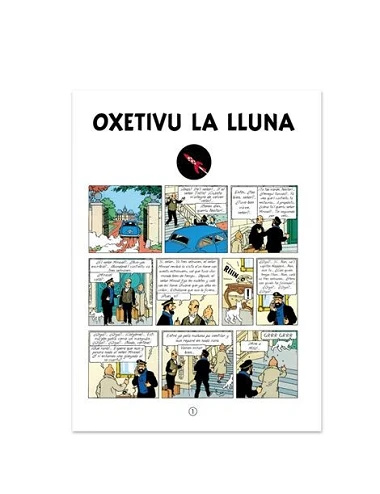
Zephyrum 16 - Tintín Oxetivu La Lluna - Asturiano
New translation of Destination Moon in Asturian with the title Oxetivu: La Lluna. New album of The Adventures of Tintin published in this language. Asturian, also known as Bable, is a Romance language spoken mainly in the Principality of Asturias and in some regions of León and Zamora. Destination Moon began to be published in the weekly magazine Tintin on March 30, 1950, nineteen years before the arrival of man on the moon. The first part of Tintin's journey with the rocket, an adventure devised by Hergé.
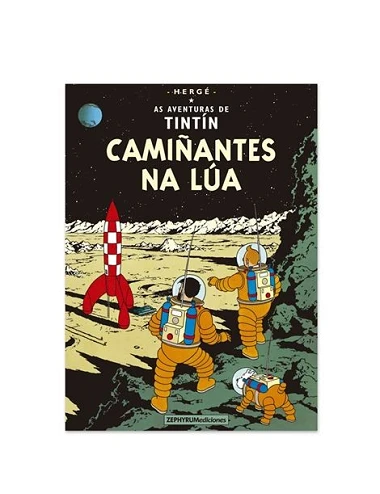
Zephyrum 17 - Tintín Camiñantes Na Lúa - Gallego
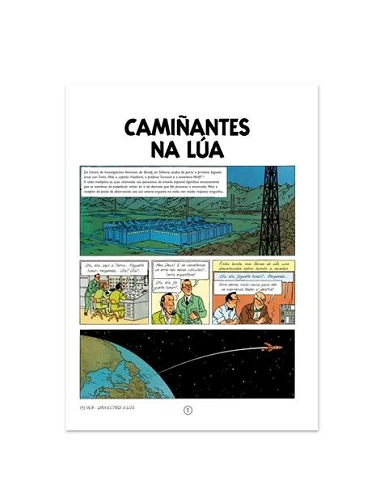
New translation of Aterrizaje en la Luna in Galician with the title Camiñantes na Lúa. New album of The Adventures of Tintin published in this language. Galician is one of the nine Romance languages that come from Latin and has about 800,000 speakers, mainly in Galicia. Aterrizaje en la Luna is the second installment of Tintin's lunar adventure, published in 1954.
The Adventures of Tintin 07 - A Illa Negra - Gallego
New translation of The Black Island in Galician with the title A illa negra. New album of The Adventures of Tintin published in this language. Galician is one of the nine Romance languages that come from Latin and has about 800,000 speakers, mainly in Galicia. The Black Island is the seventh album of The Adventures of Tintin in which Hergé skillfully combines fact and fiction. Tintin is Belgium's most famous journalist and on his return from South America, he reflects in this adventure certain elements of the course of history at the time and Hergé's uneasiness in a climate of disturbing peace and fear of another war.
worldwide. He also makes the myth of the monster coexist with his passion for modernity and the technical advances of the time: television, radio, airairplanes, cars, printing... It is the album that has more versions. The first appeared weekly in Le Petit Vingtième, in 1937 and 1938, a version that Casterman later published in black and white album format and 124 pages. The second, from 1943, is the colored version, barely modified and already adapted to the canonical format of 62 pages. Finally, the 1966 version, in which Bob de Moor intervened, was completely redrawn and corrected at the request of the London publisher. We have based our translations on the latter edition.
ZEPHYRUM 17 - TINTÍN ATERRIZACHE EN A LUNA - Aragonés
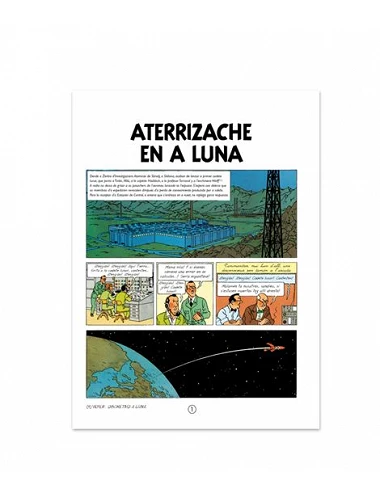
New translation of Explorers on the Moon in Aragonese with the title Aterrizachee en a Luna. New album of The Adventures of Tintin translated into this Romance language spoken mainly in the northern regions of Aragon. Currently, Aragonese fabla is spoken by about 25,000 people. Landing on the Moon is the second installment of Tintin's lunar adventure, published in 1954.
Zephyrum 17 - Tintin Auem Cauishigat Ena Lua - Aranese
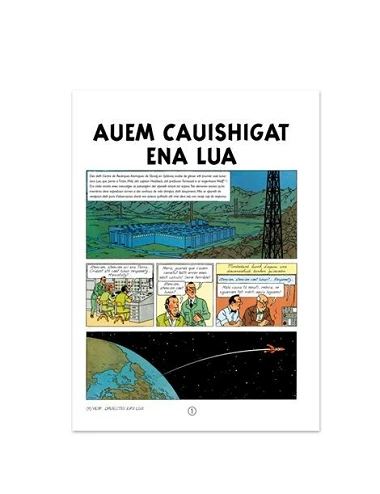
New translation of Explorers on the Moon in Aranese with the title Auem cauishigat ena Lua. New album of The Adventures of Tintin translated into this Occitan language spoken in the Aran Valley, a region in the northwest of Catalonia. It is the language of this region and currently has about 4,500 speakers. Explorers on the Moon is the second installment of Tintin's lunar adventure, published in 1954.
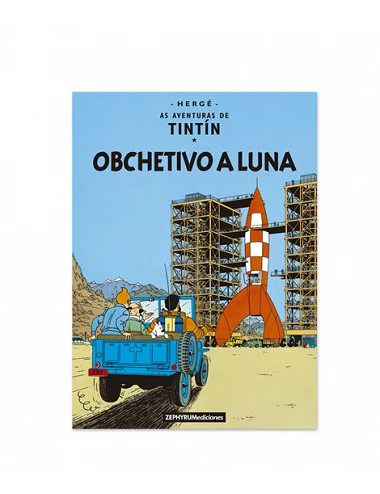
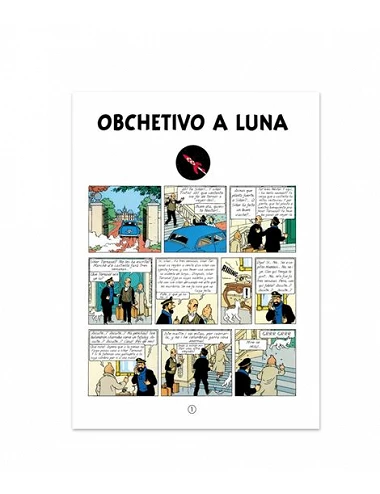
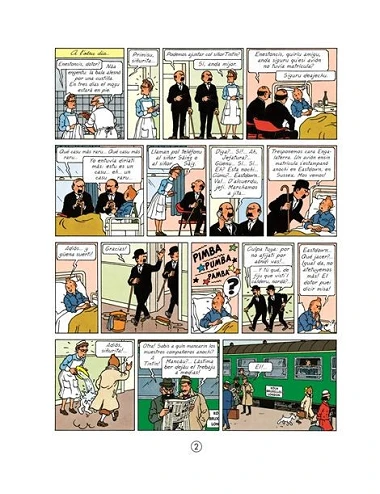
New translation of Destination: Moon in Aragonese with the title Obchetivo a Luna. New album of The Adventures of Tintin translated into this Romance language spoken mainly in the northern regions of Aragon. Currently, Aragonese is spoken by about 25,000 people. Objective: The Moon began to be published in the weekly magazine Tintin on March 30, 1950, nineteen years before the arrival of man on the moon. The first part of Tintin's journey with the rocket, an adventure devised by Hergé.
Zephyrum 17 - Tintín Pasiando Pela Lluna - Asturiano
New translation of Explorers on the Moon in Asturian with the title Pasiando pela Lluna. New album of The Adventures of Tintin published in this language. Asturian, also known as Bable, is a Romance language spoken mainly in the Principality of Asturias and in some regions of León and Zamora. Explorers on the Moon is the second installment of Tintin's lunar adventure, published in 1954.
The Adventures of Tintin 07 – La Isla Negra - Cantabria
New translation of The Black Island in Cantabrian with the title The Black Island.
The Black Island is the seventh album of The Adventures of Tintin in which Hergé skillfully combines fact and fiction. Tintin is Belgium's most famous journalist and on his return from South America, he reflects in this adventure certain elements of the course of history at the time and Hergé's uneasiness in a climate of disturbing peace and fear of another world war. It also makes the myth of the monster coexist with his passion for modernity and the technical advances of the time: television, radio, airairplanes, cars, printing... It is the album that has more versions. The first appeared weekly in Le Petit Vingtième, in 1937 and 1938, a version that Casterman later published in black and white album format and 124 pages. The second, from 1943, is the colored version, barely modified and already adapted to the canonical format of 62 pages. Finally, the 1966 version, in which Bob de Moor intervened, was completely redrawn and corrected at the request of the London publisher. We have based our translations on the latter edition.
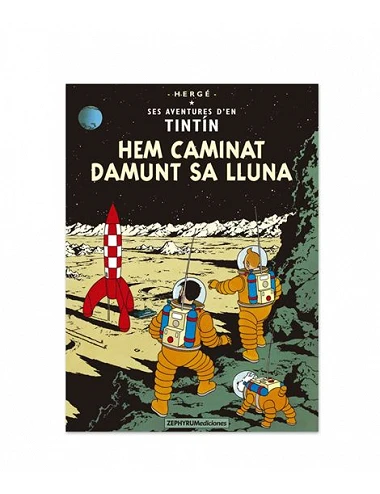
ZEPHYRUM 17 - TINTÍN HEM CAMINAT DAMUNT SA LLUNA
New translation of Explorers on the Moon in Mallorquin with the title Hem caminat damunt sa Lluna. Second album of The Adventures of Tintin published in this linguistic variety of Catalan, spoken on the island of Mallorca and other islands of the Balearic archipelago. Aterrizaje en la Luna (Landing on the Moon) is the second installment of Tintin's lunar adventure, published in 1954.
Tintin and the Art-Alpha, unfinished album, is finally part of the 23 other adventures of Tintin. In the months following Hergé's death on March 3, 1983, speculation was rife: many readers wanted the master's collaborators to finish the story. But Hergé was clear: there would be no new Tintins after him. Finally, in 1986, a luxurious album was published, in two booklets, with the main sketches of the cartoonist. A few years after the publication of Tintin and the Picaros, and shortly before the fiftieth anniversary of his hero, Hergé chose as the setting for his next album the world of contemporary art, which he knew particularly well. He throws Tintin into it without knowing very well where this story was going to lead him. Hergé works sporadically, wishing not to disappoint his readers, but illness overtakes him and soon convinces him that this adventure will never be finished and that it will become Tintin's last adventure.
"If others were to take up Tintin, they might do it better, or worse, but one thing is certain: they would do it differently, and then it would no longer be Tintin" (Hergé).
Translated by Concepción Zendrera
23 x 30 cm
Cardboard
64 pages
Collection of official Tintin badges, with illustrations of vignettes belonging to the adventures: "The crab with the golden claws", "The secret of the Unicorn" and "The treasure of Rackham the Red".
Collectible TF1 Tintin resin figurine - TINTIN WITH HIS SUITCASE
This hand-painted figurine of Tintin corresponds to the vignette C3 (page 2) of the album Tintin in America. The intrepid journalist wears armor alone in this adventure and, in this particular scene, he heads on foot to Chicago after being abandoned in the middle of the road by the cab driver, who is actually a gangster.
Height: 12 cm.
A4 folder - Petit Vingtième America
Dossier with A4 tab with the cover of the Petit Vingtième of December 15, 1932 during the publication of Tintin in America.
MUG TAZA TINTÌN - TINTÍN Y HADDOCK LUNA, 47986
Esta taza es parte de la serie Moon, Tintín y Haddock en traje lunar, Tintín trata de atrapar al Capitán Haddock que acaba de salir del Cohete Lunar por capricho. Esta escena es del álbum On a marche sur la lune página 10 C3. Esta taza de porcelana es ideal para todas las bebidas calientes. Lo tendrás bien sujeto en la mano gracias a un amplio mango curvado. Puede lavarse en el lavavajillas y en el microondas. Cada taza está empaquetada en una bonita caja de cartón. Un regalo ideal.
COLLECTIBLE TINTIN PVC FIGURINE ROCKET 17CM.
New COLLECTIBLE TINTIN PVC FIGURINE of the Explorers on the Moon rocket in a much larger size than the standard one. Its material is ideal for children to play and its finish is suitable to be a decorative element in any corner of the house. The tip of the rocket is flexible.
Hergé Y El Arte
Indispensable book for any follower of Hergé's work. Published by Zephyrum, this volume is a detailed study of The Adventures of Tintin and the drawing style of the Belgian master.